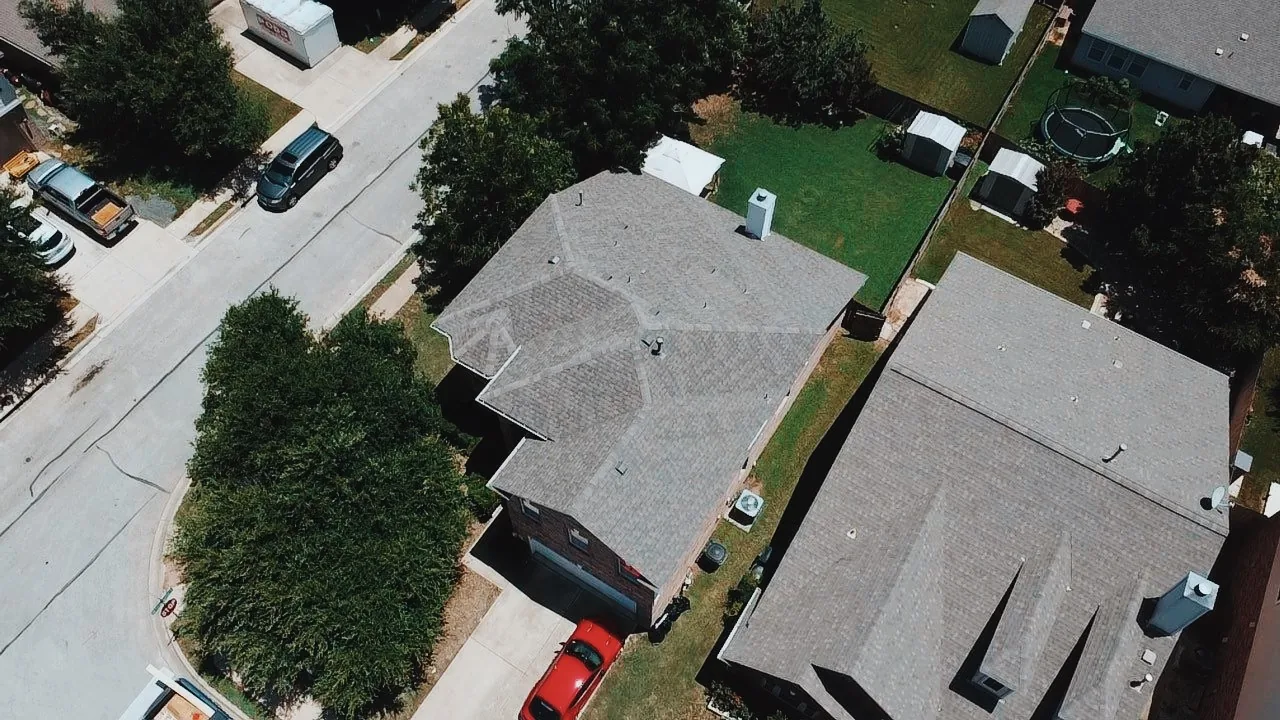
Roof maintenance on a Central Texas house comes down to three habits: a look at the roof every spring and fall, another look after any hailstorm or high wind, and keeping gutters and overhanging limbs clear. The National Roofing Contractors Association says homeowner roof maintenance should be confined to a fall and spring check for cracked or curling shingles and to cleaning debris out of the gutters. Everything past that belongs to someone on the roof with the right equipment.
How often does a roof need maintenance?
A roof needs a look twice a year and after every serious storm. NRCA’s consumer guidance names fall and spring as the times to check, and says biannual inspections often uncover cracked, warped or missing shingles, deteriorated flashing and granules piling up in the gutters before any of it turns into a leak.
In Central Texas the spring check lands just ahead of hail season. The National Weather Service office in San Angelo found that 94 percent of very large hail reports in its west central Texas record fell between March and June, with May the busiest month. The fall check catches whatever spring storms and a summer of sun left behind, before the cold months.
Why does roof maintenance matter if nothing is leaking?
Roof maintenance matters before a leak because most of what shortens a roof’s life happens quietly. NRCA says most new roofs are designed for about 20 years of service, and that the actual life span depends on climate, design, material quality, installation and adequate maintenance. The NAHB life-expectancy study that NRCA keeps in its library lists the level of maintenance among the same handful of factors.
A cracked pipe boot or a lifted shingle is a small repair while it is still dry underneath. NRCA notes that a leak does not necessarily mean a whole new roof, because loose flashing or one damaged section can cause it. Finding those spots on a schedule is what keeps a roof repair small.
What can you check from the ground?
Most of a homeowner’s share of roof maintenance can be done from the driveway, the yard and the attic. The Asphalt Roofing Manufacturers Association’s FAQ says to look from the ground for cracked, curled or missing shingles and for lost granules, and to look in the attic at the underside of the deck and rafters for stains or wet spots.
- Shingles. Walk around the house with the sun behind you and look for missing tabs, edges that curl up, or patches darker than the rest of the roof.
- Granules in the gutters and at the downspouts. ARMA explains that granules are ceramic-coated crushed rock that shield the asphalt from ultraviolet light, and that once they are gone the asphalt beneath deteriorates. A sandy pile at a downspout outlet is worth a photo.
- The attic. InterNACHI, the home inspectors’ association, notes that stains on the underside of the roof decking show past and present leaks even when nothing has reached the ceiling yet. A flashlight on a dry afternoon is enough.
- Gutters and limbs. The Texas Department of Insurance’s home checklist says to trim trees hanging over the house and to clean the gutters. Live oak limbs that rest on the roof scrape granules off every time the wind moves them.
NRCA’s advice for anyone who does go up a ladder is to stay on the ladder and off the roof if possible. We would go one step further and say leave the ladder to us too.
What does Central Texas heat do to a roof?
Central Texas summer heat ages a shingle roof from underneath as well as from above. ARMA’s ventilation guidance says heat built up in the roof deck from summer sun accelerates the aging of asphalt roofing products. That is why attic ventilation is part of roof maintenance, not only an insulation question.
InterNACHI describes how a vented attic is meant to work: hot, moist air leaves through ridge or other exhaust vents while fresh air comes in through the soffit vents, and when that flow breaks down, moisture builds up in the attic. The 2012 International Residential Code, which Texas adopts, sets the minimum net free vent area at 1/150 of the vented attic space, or 1/300 when the vents are split between high and low on the roof (Section R806.2). Soffit vents painted over or packed with insulation are one of the common things a maintenance visit turns up.
What should you watch for after a hailstorm or high wind?
After a hailstorm or a strong wind, watch for shingles that have lifted or lost their seal, because hail and wind work together on a roof. IBHS, the insurance industry’s building research lab, says sealant strength is a critical factor in resisting wind damage, particularly after hail. Its testing found that weathered shingles hit by two small-hail events became up to ten times more susceptible to damage from later large hail than new shingles.
So the storm you shrugged off in April can matter in November. A look after each storm, rather than only after the big one, is how the damage gets caught while it is still a repair. Our post on what a hail damage inspection finds covers what bruising looks like and what gets mistaken for it.
What a maintenance visit from us covers
When we come out for a roof check, we walk the roof and look at the places that fail first: pipe boots, flashing at walls and chimneys, valleys, exposed nail heads, the drip edge and the ridge. InterNACHI’s inspection guidance points out that the rubber or plastic boot around a plumbing vent dries out and cracks with age, and some are missing entirely, which is one of the most common things we find on a roof that otherwise looks fine. We check the attic for stains and airflow when there is access, and we photograph what we find so you can see it yourself.
If everything is sound, we tell you that and leave. If something needs attention, we explain whether it is a small repair or a sign the roof is near the end of its life. For homes in Liberty Hill, Georgetown, Leander, Cedar Park and Round Rock, book a roof check here before spring storm season, or after the next storm that has you wondering.