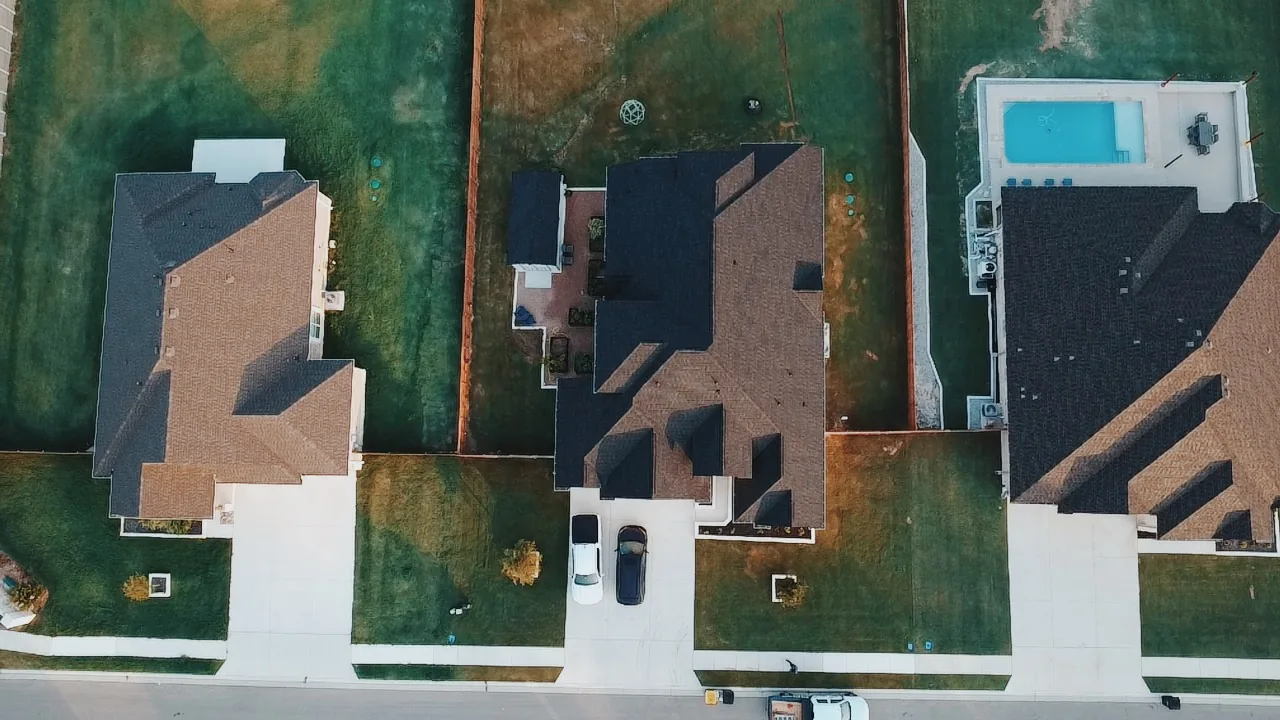
A Central Texas freeze rarely damages a sound roof on its own. What does the damage around Liberty Hill is ice loading the trees above the house, gutters that hold water when it needs to drain, shingles that crack or lose their seal when someone walks on them cold, and attic pipes that burst and leave a ceiling stain that looks exactly like a roof leak. The winter roof prep that matters happens in October and November, before the first hard freeze, while shingles are still warm enough to work on.
How often does Central Texas actually freeze?
Central Texas freezes every winter, but not on a predictable date. The NOAA Regional Climate Centers’ ACIS station record for Austin Camp Mabry shows that over the eleven winters from 2015-16 through 2025-26, the first night at or below 32 degrees came as early as November 1 and as late as January 6. Each of those winters had between 5 and 17 nights at or below freezing.
The bigger events are less frequent and do more harm. NOAA’s Storm Events Database records 19 winter storm and winter weather events in Williamson County across the ten years 2016 through 2025. Most were a light glaze on roads and bridges. Two were not: February 2021 and the ice storm of late January into February 2023.
What ice does to a roof in Williamson County
Ice reaches most roofs here by way of the trees. During the February 2021 storm, NOAA’s record notes 0.4 inch of ice in Cedar Park and a spotter reporting healthy oak branches four inches in diameter breaking under it. Snow followed, with totals from 4.8 inches in Georgetown to 8.0 inches in Cedar Park and Leander. In the 2023 storm, 0.5 inch of ice built up in Round Rock and 0.33 inch in Leander, and NOAA records trees and branches down around the county along with thousands of power outages.
A limb that comes down on a roof punctures decking and tears shingles in a way no freeze does on its own. That is why the first outdoor item on the Texas Department of Insurance’s winter readiness checklist is to trim trees hanging over your house, and the second is to clean the gutters. Branch work near a roofline is a job for a tree crew, not a homeowner on a ladder.
Do Central Texas roofs get ice dams?
Classic ice dams are uncommon in Central Texas because they need snow sitting on a roof for days. The Insurance Institute for Business & Home Safety describes the mechanism: attic heat melts snow on the upper roof, the water runs down to the colder eaves and refreezes, and water backed up behind that ice works under shingles or through cracked ones into ceilings and walls. The 2012 International Residential Code, which Texas law adopts as its residential code, requires an ice barrier extending at least 24 inches inside the wall line only in areas with a designated history of ice forming along the eaves.
The local version of the problem is a clogged gutter. Leaves from the autumn drop hold water in the trough, the water freezes, and the next melt has nowhere to go but back toward the fascia. IBHS gives the same instruction TDI does: clear debris from gutters and downspouts so water flows away from the house. If yours overflow in an ordinary rain, they will do worse in an ice storm, and that is worth sorting out on our gutter page before December rather than after.
Why cold shingles crack and lose their seal
Asphalt shingles stiffen in the cold. The Asphalt Roofing Manufacturers Association states in its cold-weather bulletin that shingles become less flexible as temperature drops and may crack or break apart, that slightly curved or buckled shingles are very susceptible to breakage underfoot in frigid weather, and that foot traffic on a cold roof can break the sealant bond between courses. ARMA also warns that a winter roof can carry nearly invisible frost or ice.
Two things follow for a homeowner. Do not go up on the roof after a freeze to look, and be wary of anyone who wants to walk it while it is still icy. And a shingle that has already lifted is better resealed in autumn, because ARMA describes the sealant as thermally activated by sun and heat, which a January roof does not get much of. Resealing lifted tabs and replacing cracked ones is ordinary roof repair work.
Is that ceiling stain the roof or a frozen pipe?
A ceiling stain that appears after a hard freeze with no rain is more likely a pipe than the roof. IBHS lists frozen pipes and leaky roofs together among the most common causes of interior water damage in cold weather, and notes that homes in warmer southern regions often run plumbing along exterior walls. TDI’s advice is to wrap exposed pipes starting in the attic, where many Texas homeowners saw pipes freeze, and Austin Water says the same about attics and garages. IBHS adds a thermostat floor of at least 55 degrees, even when no one is home.
The test we use on a call is timing. A stain that grows during rain points at the roof. A stain that shows up during a thaw, with dry skies, points at plumbing, and the water needs to be shut off before anyone opens the ceiling.
What to get done before the first freeze
The National Roofing Contractors Association recommends a roof inspection twice yearly, in spring and fall, and after any severe storm. Autumn is the one that sets up winter: limbs over the roof identified, gutters and downspouts running clear, lifted or cracked shingles sealed or replaced while the weather still allows it, and the attic checked for insulation gaps and exposed pipe, which TDI also puts on its list.
If you would like a second set of eyes on any of that, we do autumn inspections across Liberty Hill, Georgetown, Leander and Cedar Park, and we will tell you plainly if there is nothing to fix. Book a look here.